Prewar apartments on the Upper West Side, the Upper East Side and in Brooklyn have the rooms people want: high ceilings, deep moldings, real plaster. They also have radiators under the windows, walls that are never flat, and outlets in odd places. A media wall here has to respect all of it.
01Work with the radiator, not against it
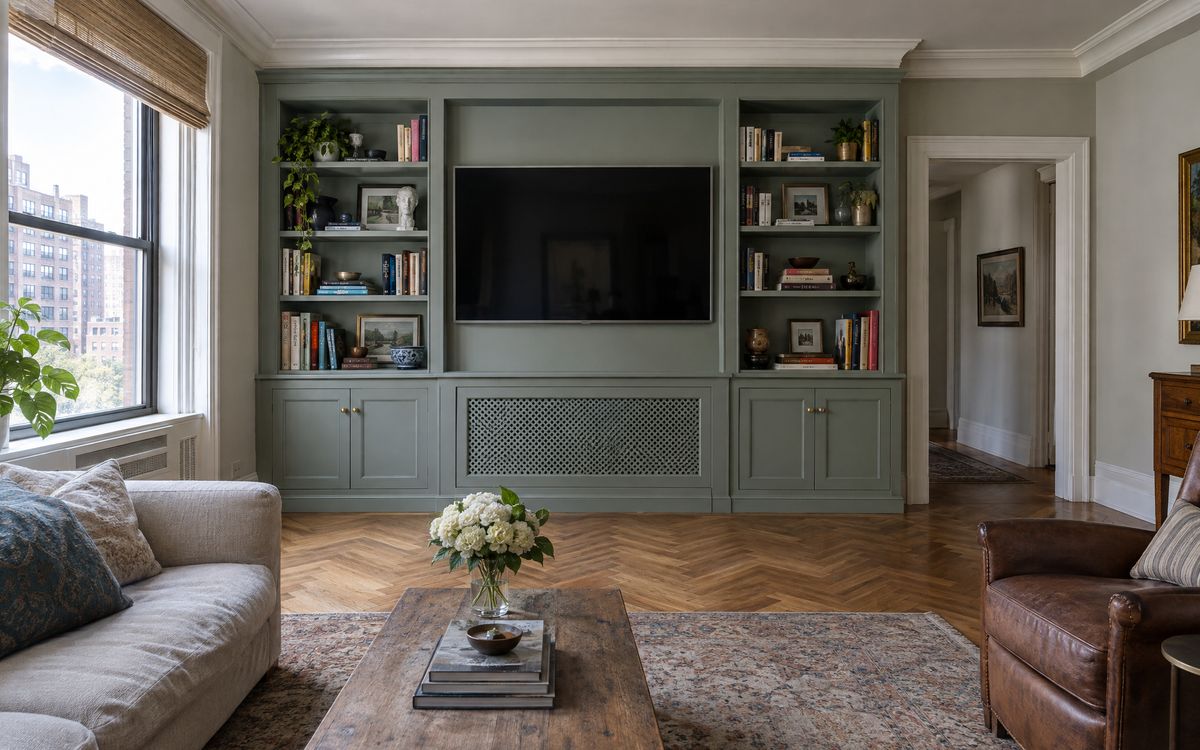
Radiators often sit on the TV wall. A built-in radiator cover with a ventilated top and a perforated or slatted front can become the base of the media wall. Leave space above and in front of the radiator so heat can move, and make the top removable for bleeding valves.
02Match the moldings
In a prewar room, a flat modern panel can look pasted on. A painted built-in with simple panelled doors, a cornice that lines up with the existing crown, and a baseboard that continues around the base will look original to the apartment. We draw the profiles from the room's own trim during the site measure.
03Scribe to the walls
Prewar walls lean and bow. Built-ins are made with scribe strips, extra material at the edges that is cut on site to follow the wall exactly. It is what separates millwork from furniture pushed against a wall.
04Wiring in old buildings
Older apartments often have few outlets and no low-voltage wiring. Plan with a licensed electrician to add a recessed outlet behind the TV and a cable path to the console. If your building is a co-op, the work usually goes into the alteration agreement.
05Lead paint in older apartments
Most prewar paint layers include lead. Cutting into walls for outlets or anchors should follow lead-safe work practices. Kloset Worx is EPA lead-safe certified.
06A layout that suits prewar rooms
Bookcases either side of the TV, a closed base cabinet that includes the radiator cover, and a painted panel behind the screen. It gives storage, hides cables, and looks like it belongs to the building.
See Manhattan media walls and Brooklyn media walls, read the design guide, or book a free design visit.